
You don’t love because: you love despite. It’s the possibility of having a dream come true that makes life interesting. I am haunted by humans.
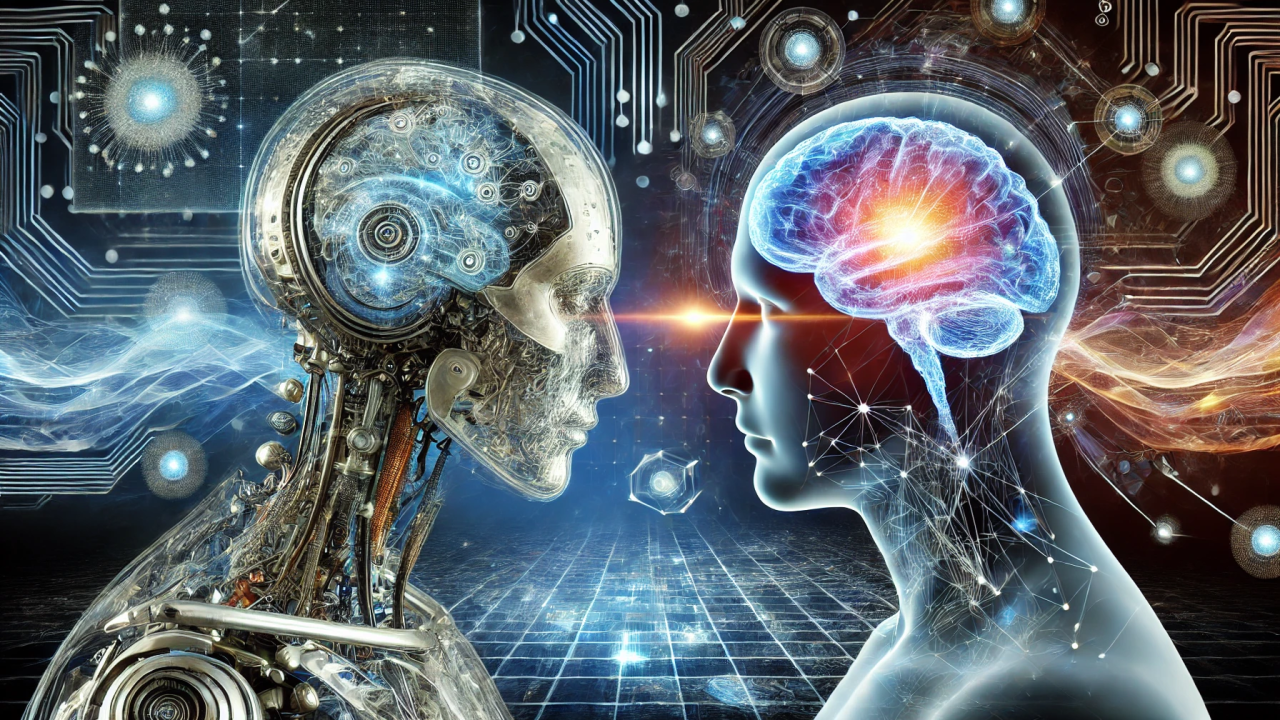
Artificial Intelligence is the most significant technological breakthrough of our time. It is the science of creating machines that can think, learn, and make decisions like humans. For decades, this idea was only found in science fiction stories. Today, it is a reality that affects almost every part of our lives. From the way we unlock our phones to the way doctors diagnose diseases, AI is quietly working in the background. It is not just a new tool; it is a new way of processing information. As this technology becomes more powerful, it promises to solve some of our biggest challenges, but it also raises important questions about the future of work and humanity.
Learning from Data
To understand AI, you must understand how it learns. Traditional computer programs follow strict rules written by humans. If you want a computer to add two numbers, you tell it exactly how to do it. AI is different. Instead of giving it rules, we give it data.
This process is called machine learning. Imagine you want to teach a computer to recognize a cat. In the old way, you would have to describe a cat using code. You would say it has whiskers, pointy ears, and fur. But this is difficult because every cat looks different. With machine learning, you simply show the computer thousands of pictures of cats. The computer analyzes the images and figures out the patterns on its own. It learns what a cat looks like through experience. The more data it sees, the smarter it becomes. This ability to learn without being explicitly programmed is what makes modern AI so powerful.
AI in Daily Life
Many people think AI is something futuristic that they will only see in movies. In reality, you use it every single day. When you open your streaming service and see a list of movies recommended for you, that is AI. The system analyzes what you watched in the past and predicts what you will like in the future.
Social media platforms use AI to decide what posts show up in your feed. They track how long you look at a photo and what you click on to keep you engaged. Even your email inbox uses AI to filter out spam. It reads the text of incoming messages and decides if they are junk or important. These invisible helpers make our digital lives smoother and more personalized. They save us time by filtering through the massive amount of information on the internet to find what is relevant to us.
The Era of Generative AI
We have recently entered a new phase called Generative AI. Traditional AI was good at analyzing existing data, but Generative AI can create new content. It can write essays, compose music, write computer code, and create realistic images from a simple text description.
This capability has shocked the world. We used to believe that creativity was a uniquely human trait. We thought machines could do math, but they could never write a poem. Now, we see that machines can mimic creativity with frightening accuracy. Writers use these tools to brainstorm ideas. Programmers use them to find errors in their code. Graphic designers use them to create prototypes in seconds. While the machine does not feel emotion or inspiration, the result often looks indistinguishable from human work. This opens up amazing possibilities for creators, but it also challenges our definition of art.
Revolutionizing Healthcare
The impact of AI on medicine will be profound. Doctors are human, and humans have limits. They get tired, they can have biases, and they cannot possibly read every new medical research paper published every day. AI does not get tired. It can process the entire sum of medical knowledge in seconds.
AI systems are being trained to look at X rays and MRI scans. They can detect early signs of cancer or heart disease that a human eye might miss. They can analyze the genetic makeup of a patient to predict which medicines will work best for them. This leads to personalized medicine, where treatment is tailored to the individual rather than the average person. In the future, every doctor will likely have an AI assistant that helps them diagnose and treat patients more accurately, reducing errors and saving lives.
The Future of Work
The rise of AI has created a lot of anxiety about jobs. It is true that AI will change the job market significantly. Jobs that involve repetitive data entry or basic analysis are at risk of being automated. If a machine can write a report in five seconds, there is less need for a human to spend five hours doing it.
However, history shows that technology usually creates more jobs than it destroys. When the calculator was invented, it did not eliminate accountants; it just changed what they did. AI will likely do the same. It will remove the boring and repetitive tasks, freeing humans to focus on work that requires empathy, strategy, and complex problem solving. We will need people to train these AI systems and ensure they are working correctly. The most successful workers of the future will be those who learn to use AI as a partner rather than viewing it as a competitor.
Safety and Ethics
As AI becomes more powerful, we must be careful. One major issue is bias. AI learns from data created by humans, and human data contains human prejudices. If an AI is trained on hiring data that favors men over women, the AI will learn to favor men too. We have to work hard to clean the data and ensure these systems are fair.
There is also the problem of misinformation. Generative AI can create fake news articles and fake images that look very real. This makes it hard to know what is true online. We need new tools to verify digital content. Furthermore, there is a fear that an advanced AI could become uncontrollable. While this is still a theoretical risk, serious researchers are working on alignment, which ensures that the goals of the AI always match the best interests of humanity. Guiding this technology responsibly is one of the most important tasks of our generation.
Conclusion
Artificial Intelligence is not a passing trend. It is a fundamental shift in how we interact with information and the world. It holds the potential to solve some of our biggest challenges, from curing diseases to fighting climate change. It offers a future of abundance and intelligence. However, it also requires us to be wise. We must guide this technology carefully, ensuring that it respects human rights and serves the common good. We are building the most powerful tool in history, and it is up to us to decide how to use it to build a better future for everyone.






Leave a Reply