

For many pool owners, autumn brings a noticeable shift in how the pool behaves. The water cools down, the swimsuits get put away, and suddenly the pool starts collecting things you didn’t have to deal with in summer. Leaves, seeds, pine needles, and fine dust seem to find their way in no matter what.
This article covers what changes during the fall season, why those changes matter for your pool, and what you can do to keep things under control with less effort.
Why Autumn Is Different for Your Pool
The main difference in fall is the amount of organic material that ends up in the water. During summer, the pool gets regular use and the surrounding trees are fully leafed out but not shedding much. Come autumn, trees begin dropping leaves, flowers release seeds, and wind carries more debris into the yard.
More Debris Means More Work for Your Filter
When leaves and seeds sink to the bottom, they start breaking down. This releases nutrients like phosphates and nitrates into the water. Algae spores, which are always present in small amounts, feed on these nutrients. The result is a pool that seems to turn cloudy or green faster than it did during the summer.
The filter has to work harder to keep up. Skimmer baskets fill up quicker. The pump strainer basket may need emptying more often. If the filter pressure rises, it usually means the system is processing more debris than usual.
Temperature Changes Affect Water Chemistry Too
Cooler water changes how chlorine works. It becomes less active, which means the same amount of chlorine may not be as effective at controlling bacteria and algae. At the same time, fewer swimmers means less introduction of fresh contaminants, so the balance shifts in a different direction.
A robotic pool cleaner can handle this shift automatically, running on a schedule to pick up debris from the floor and walls before it has time to break down and affect the water chemistry. This takes one task off your hands during a season when outdoor chores pile up.
What Typically Goes Wrong During Leaf Season
Most issues that show up in autumn are not sudden problems. They build up gradually over a few days or weeks. Recognizing the early signs can help you address them before they turn into bigger headaches.
Staining on the Pool Floor and Walls
Leaves that sit on the pool floor for more than a day or two can leave behind stains. Oak leaves, maple leaves, and pine needles are particularly known for this. The tannins in the leaves leach into the water and can leave brownish or yellow marks on light-colored pool surfaces.
Regular removal of debris before it settles is the most straightforward way to prevent this. Even a quick skim each day makes a noticeable difference during peak leaf fall.
Cloudy Water That Does Not Clear Up
If the water starts looking dull or hazy, it is often a sign that the filter is working at full capacity but cannot keep up with the organic load. Backwashing or cleaning the filter more frequently during this season can help restore clarity.
Some pool owners also notice that their chlorine levels drop faster than expected. This is normal during heavy leaf fall. Testing and adjusting the water chemistry every few days, rather than once a week, helps keep things balanced.
Equipment Running Under Extra Load
A pump that runs with a partially clogged skimmer or a dirty filter draws more power and works harder than it should. Over time, this added strain can reduce the lifespan of the equipment.
Keeping an eye on the pressure gauge and cleaning the baskets regularly during autumn can prevent unnecessary wear. If the pressure rises more than 8 to 10 psi above normal, it is usually time for a filter clean.
A Practical Approach to Fall Pool Care
Rather than trying to do everything at once, a few small adjustments to your routine can make a big difference. These are simple enough that they do not take much time, but consistent enough that the pool stays in good shape.
Skim Often but Keep It Short
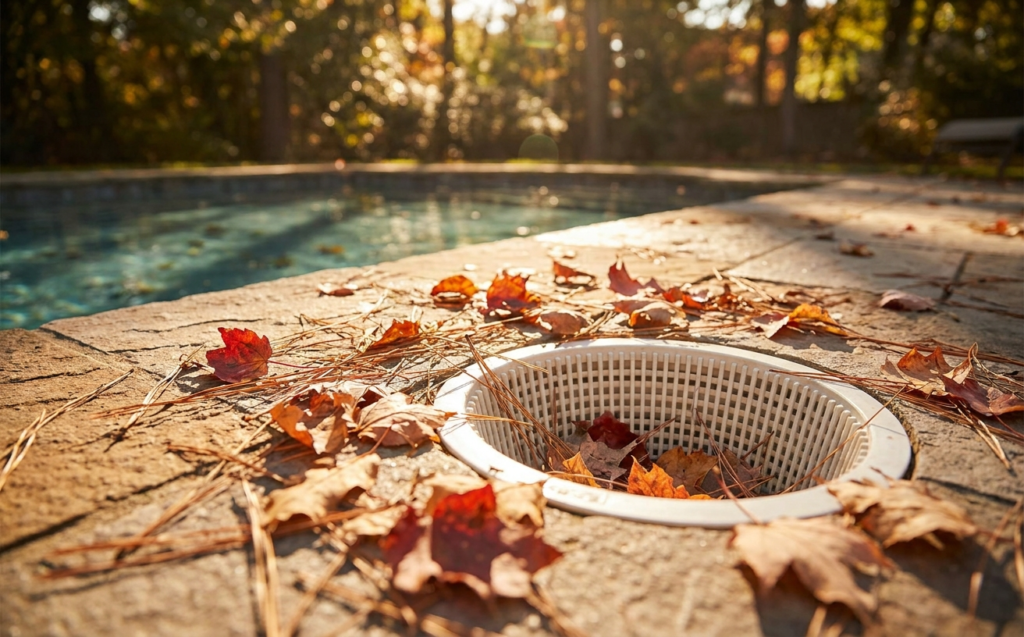
You do not need to spend an hour skimming every day. Five minutes in the morning and five minutes in the evening, especially during peak leaf fall, is usually enough to keep the surface clear. A leaf rake or a net with a fine mesh works best for catching small debris.
Check and Empty Baskets More Frequently
The skimmer basket and pump strainer basket fill up much faster in autumn. Checking them every two to three days instead of once a week keeps water flowing freely. A full basket reduces circulation and puts extra strain on the pump.
Trim Overhanging Branches
If there are tree branches hanging over the pool, cutting them back before the heavy leaf fall starts can reduce the amount of debris entering the water by a noticeable amount. This is a one-time task that pays off over the entire season.
Adjust Pump Runtime
As the water gets cooler and the pool gets less use, some pool owners reduce the pump runtime slightly. However, during heavy leaf fall, keeping the pump running for the full recommended duration helps the skimmer catch more floating debris before it sinks.
When to Consider Extra Help
For some pool owners, the fall season is manageable with the standard tools. For others, especially those with many trees nearby or limited time during the week, an automated cleaning option can make a meaningful difference.
An automatic cleaner that runs daily can handle the floor and wall cleaning that would otherwise require manual vacuuming. This is particularly helpful during weeks when the leaves are falling heavily and you cannot get to the pool every day.
The goal is not to eliminate all manual work. It is to reduce it to a level that feels manageable, so the pool stays clean without taking over your fall weekends.
Wrapping Up
Autumn does not have to mean constant pool maintenance. A few small adjustments to your routine, combined with the right tools, can keep the water clear and the equipment running smoothly through the season. The key is staying consistent with the basics and addressing small issues before they grow.














Leave a Reply