
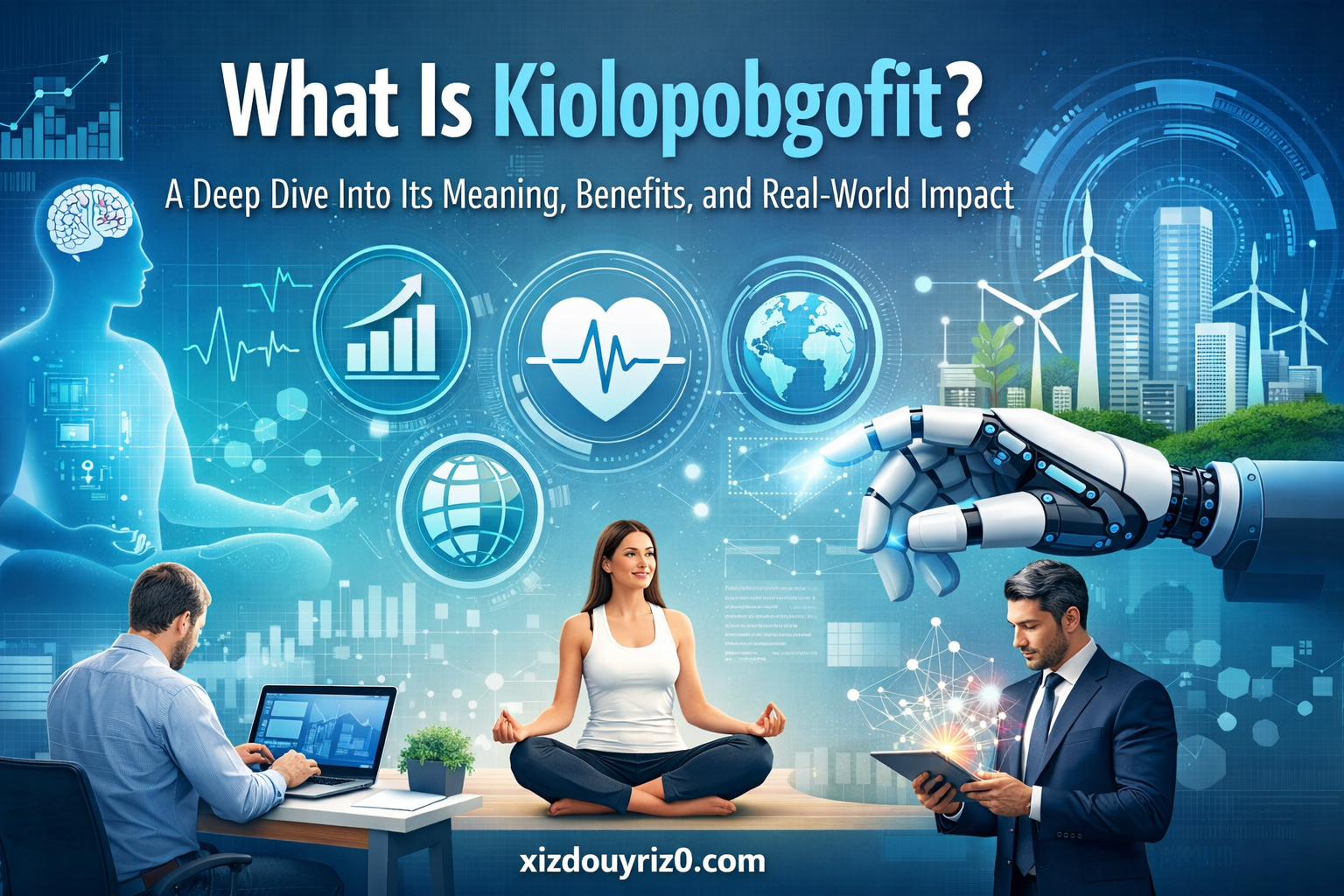
What Is Kiolopobgofit — A Definitive Guide to Its Meaning and Impact
Imagine a concept that bridges physical wellness, mental resilience, performance optimization, and sustainable lifestyle habits into a unified practice. That’s the emerging world of kiolopobgofit — a term gaining traction across coaching communities, wellness innovators, and integrative practitioners. But what is kiolopobgofit really, and why do so many experts believe it represents the future of holistic health?
In this comprehensive guide, we break down the essence of kiolopobgofit, its evolution, science‑backed foundations, real‑world applications, and how you can adopt its principles to enhance your life. Whether you’re a wellness enthusiast, a performance seeker, or simply curious about innovative health paradigms, this resource is designed to give you clarity, context, and practical insight.
The Origins of Kiolopobgofit
The question what is kiolopobgofit starts with the term’s roots. Unlike traditional wellness labels that center on a single domain (e.g., diet or exercise), kiolopobgofit emerged from integrative thinking. Early pioneers combined physiological research, cognitive science, movement studies, and lifestyle design to create a framework that addresses human potential in a multidimensional way.
To understand how this concept took shape, consider the words that often surface in early discourse: kinetic, optimal performance, bio‑adaptation, flow state, and fit — all pointing toward a synthesis of body, mind, and context. Kiolopobgofit is not just a practice; it’s a way of approaching each aspect of human performance with intention and evidence‑based strategy.
Contemporary practitioners apply kiolopobgofit in diverse settings — from elite athlete coaching to corporate wellbeing programs. It’s gaining recognition because it respects complexity without sacrificing practicality.
Defining Kiolopobgofit in Practical Terms
So, what is kiolopobgofit beyond a concept? At its core, kiolopobgofit is a holistic framework for enhancing human capability through adaptive practices that integrate physical conditioning, mental training, lifestyle habits, and resilience strategies. It isn’t a single routine or protocol, but rather a modifiable system tailored to individual goals and contexts.
To simplify:
- Kiolopobgofit focuses on adaptive performance rather than fixed standards.
- It emphasizes individualized progression over one‑size‑fits‑all plans.
- It values connectivity between domains — physical, cognitive, emotional, and environmental.
This evolutionary approach mirrors trends in human optimization, where integrated systems often outperform siloed methods.
Kiolopobgofit Versus Traditional Fitness
Understanding what is kiolopobgofit involves contrasting it with traditional fitness models. Conventional fitness typically revolves around exercise prescriptions, nutritional guidelines, and performance benchmarks. While effective, such models can miss crucial interaction effects — how stress impacts recovery, how mindset influences endurance, or how daily rhythms shape metabolic efficiency.
Here’s a structured comparison:
| Feature | Traditional Fitness | Kiolopobgofit Framework |
| Focus | Physical outcomes (strength, weight loss) | Integrated outcomes (performance, resilience, wellbeing) |
| Personalization | Moderate | High – tailored to context and individual profiles |
| Mind–Body Connection | Secondary | Central |
| Habit Integration | Often isolated | Core principle |
| Stress & Resilience | Peripheral | Central analytic component |
| Long‑Term Sustainability | Variable | Emphasized |
This table highlights how kiolopobgofit extends beyond purely physical goals to incorporate psychological, behavioral, and environmental factors — making it a more rounded approach for sustained improvement.
The Core Pillars of Kiolopobgofit
To answer what is kiolopobgofit comprehensively, we must explore its foundational pillars. Each pillar contributes to a unified system, and together they create a framework that is adaptable, evidence‑informed, and human‑centered.
Movement and Physical Adaptation
Kiolopobgofit frames movement not merely as exercise, but as functional adaptation. This goes beyond repetition to emphasize purposeful variance, encouraging movement patterns that support everyday life, athletic performance, and injury prevention.
This pillar draws on biomechanics, neuromuscular adaptation, and metabolic flexibility — optimizing for longevity rather than transient gains.
Cognitive Conditioning
Mental resilience is a defining feature of kiolopobgofit. Cognitive training includes focused attention practices, stress modulation techniques, and strategies for enhancing executive function. This supports decision‑making under pressure and cultivates psychological flexibility, a skill crucial in both performance settings and daily life.
Lifestyle Integration
Unlike conventional protocols that might isolate diet or sleep, kiolopobgofit treats lifestyle as contextual ecosystem — a dynamic interplay of habits that shape biological and psychological outcomes.
This pillar emphasizes:
- Sleep quality optimization
- Nutritional adaptability
- Stress management
- Social and environmental context
Adaptive Recovery
Recovery in the kiolopobgofit sense is not “rest between sessions.” It’s an adaptive feedback cycle responsive to performance outputs and individual stress thresholds. It includes physiological recovery (e.g., sleep, mobility) and psychological recovery (e.g., mindfulness, restorative practices).
Together, these pillars answer what is kiolopobgofit in terms of both structure and application.
How Kiolopobgofit Works in Everyday Life
Understanding what is kiolopobgofit fully means seeing it in action. It’s about integration, where real life becomes the training ground — not just the gym.
Imagine a tech executive who:
- Begins the day with attentional priming (cognitive conditioning),
- Uses movement micro‑habits during work intervals,
- Applies nutritional timing tailored to workload,
- Implements adaptive recovery at night with sleep hygiene and relaxation protocols.
This is kiolopobgofit in practice — not a rigid routine, but a dynamic, context‑sensitive system.
Another example is an athlete returning from injury. With kiolopobgofit principles:
- Physical rehab is synchronized with mental resilience practices.
- Sleep and stress metrics inform training intensity adjustments.
- Habit designs support sustainable recovery.
In both scenarios, the system responds to feedback loops — a hallmark of kiolopobgofit methodology.
Scientific Foundations and Evidence
People often ask: is kiolopobgofit just marketing, or is there substance? The answer lies in its multi‑disciplinary roots. While the term itself may be new, the components are grounded in established science:
- Neuroscience informs cognitive training,
- Exercise physiology underpins movement strategies,
- Behavioral psychology supports habit formation,
- Chronobiology shapes lifestyle timing principles.
A key quote that encapsulates the philosophy is from integrative performance coach Dr. Maria Alvez: “True optimization arises not from pushing harder, but from understanding the interconnected architecture of human function.”
This reinforces that kiolopobgofit isn’t a fad — it’s a synthesis of validated principles applied with nuance and person‑centered strategy.
Key Benefits of Kiolopobgofit
When people explore what is kiolopobgofit, they often want to know the benefits. Here are some of the most commonly reported outcomes:
- Enhanced energy resilience — improved adaptation to stress and daily fluctuations.
- Sustained performance gains — through integrated conditioning rather than isolated training.
- Improved mental clarity — due to cognitive practices that strengthen focus and executive function.
- Better recovery and sleep quality — because recovery is prioritized and systematically optimized.
- Greater habit sustainability — habits aligned with personal context are more enduring.
These benefits often reinforce each other, leading to compounding improvements over time.
Who Can Benefit From Kiolopobgofit?
The versatility of kiolopobgofit makes it broadly applicable. Here are a few profiles where it’s particularly impactful:
- Busy Professionals seeking integrated strategies to manage stress and performance.
- Athletes and Trainers looking for a holistic enhancement framework.
- Rehabilitation Clients who need adaptive recovery pathways.
- Health Enthusiasts who want a structured yet flexible approach.
- Executives and Leaders interested in cognitive and lifestyle performance.
In each case, the answer to what is kiolopobgofit becomes a tailor‑made strategy rather than a generic solution.
Common Misconceptions
Because kiolopobgofit is still emerging, misconceptions persist:
- It’s “just fitness.”
In reality, it spans physical, cognitive, and lifestyle domains. - It’s too complex to implement.
While comprehensive, its core practices can integrate seamlessly into daily life. - It’s only for elite performers.
On the contrary, it scales to any individual’s goals and context.
Clarifying these misconceptions helps demystify the concept and makes kiolopobgofit more accessible.
Integrating Kiolopobgofit Into Your Life
Starting with kiolopobgofit is about intentional design, not drastic overhaul. Here’s how you might begin:
- Map your current lifestyle — identify what supports or hinders your goals.
- Select one core pillar (e.g., movement or cognitive conditioning) and focus for a week.
- Track responses (energy, mood, sleep) to adjust intelligently.
- Build adaptive feedback loops rather than fixed expectations.
This phased approach supports sustainable adoption while answering the fundamental question: what is kiolopobgofit in your own life context?
Technology and Tools That Support the Framework
Tools can enhance kiolopobgofit practices, especially for tracking and feedback:
| Tool Category | Example Use |
| Wearables | Track sleep, recovery, and movement patterns |
| Apps | Cognitive training and habit tracking |
| Journals | Daily reflection and adaptive insights |
| Nutrition Platforms | Personalized meal timing and nutrient strategies |
| Coaching Support | Tailored guidance and accountability |
These tools help translate abstract principles into actionable data, empowering informed decision‑making.
A Case Study: Real‑World Transformation
Consider a project manager juggling high workload and frequent travel. Integrating kiolopobgofit principles:
- Movement became mobility micro‑sessions between meetings.
- Cognitive conditioning focused on stress resilience techniques.
- Sleep routines were optimized around travel schedules.
- Nutrition shifted to adaptive timing based on flight patterns.
Within eight weeks, the individual reported clearer focus, fewer burnout symptoms, improved sleep scores, and greater physical ease — illustrating how kiolopobgofit answers real challenges.
Cultural and Future Trends
As wellness paradigms evolve, the demand for integrated frameworks like kiolopobgofit grows. Organizations increasingly seek approaches that:
- Support employee resilience,
- Enhance cognitive performance,
- Promote sustainable lifestyle habits.
Understanding what is kiolopobgofit within this trend underscores why it’s gaining attention — it aligns with broader shifts toward personalized, holistic wellbeing.
Conclusion
Answering the question what is kiolopobgofit reveals more than a definition — it uncovers a practical, integrative, and dynamic framework for human performance. Rooted in science and adaptable across contexts, kiolopobgofit empowers individuals to optimize body, mind, and lifestyle in harmony.
As you explore these principles, remember that kiolopobgofit isn’t a destination but a living system — one that evolves with you.
Frequently Asked Questions
What is kiolopobgofit in simple terms?
Kiolopobgofit is an integrative framework that combines physical conditioning, cognitive training, lifestyle design, and adaptive recovery to optimize overall human performance.
How does kiolopobgofit differ from regular fitness?
While traditional fitness focuses mainly on exercise and physical metrics, kiolopobgofit includes mental resilience, lifestyle habits, and adaptive strategies alongside physical training.
Can beginners practice kiolopobgofit?
Yes, kiolopobgofit is scalable — beginners can start with foundational practices and gradually incorporate more pillars as they progress.
Is kiolopobgofit backed by science?
The framework draws on well‑established scientific disciplines such as exercise physiology, neuroscience, behavioral psychology, and chronobiology.
How long does it take to see results with kiolopobgofit?
Results vary individually, but many people notice improvements in energy, focus, or recovery within a few weeks of consistent practice.







Leave a Reply