
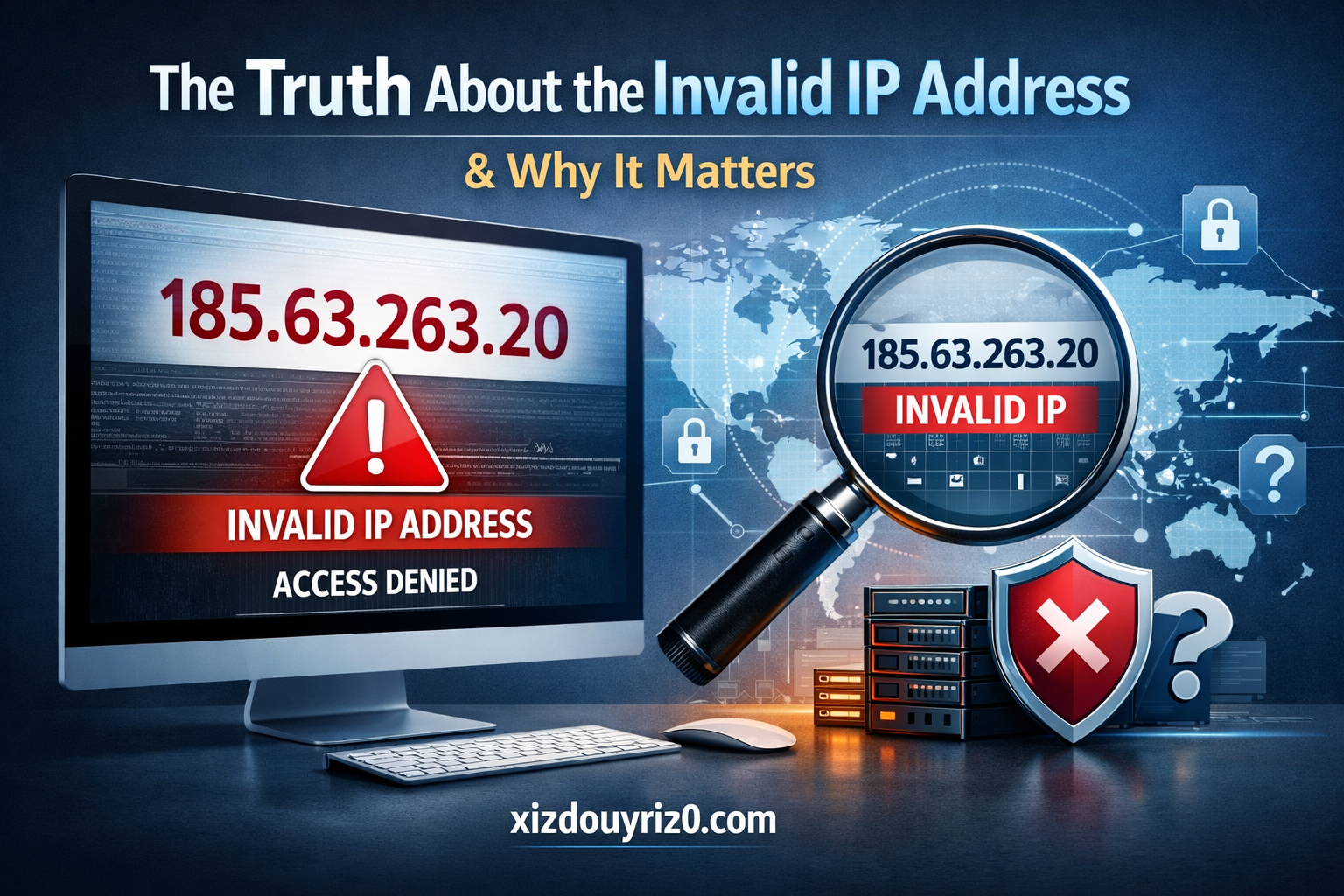
185.63.263.20: Understanding the Myth, Reality & Network Implications
The term 185.63.263.20 has garnered attention across cybersecurity forums, server logs, and IT communities — not because it’s a legitimate online destination, but precisely because it isn’t. At first glance, 185.63.263.20 looks like any other IPv4 address — four groups of numbers separated by dots. Yet one deceptive segment (263) immediately disqualifies it from ever being valid.
To non‑technical readers encountering this string in reports, firewalls, or analytics, the question often becomes: Is 185.63.263.20 real? Is it a threat? Should I worry? This comprehensive guide answers those questions and more. We’ll unpack what 185.63.263.20 technically represents (or fails to represent), how such addresses emerge, why they matter to network administrators, and how to protect your systems when you see them.
What Exactly Is 185.63.263.20?
185.63.263.20 superficially follows the IPv4 pattern — four decimal numbers separated by dots — but there’s a critical flaw: one segment contains a number larger than 255.
In standard IPv4 addressing, each octet (each group of numbers) must be within the range of 0 to 255. That’s a hard rule defined by how IPv4 encodes addresses in binary. Because 263 lies outside that range, 185.63.263.20 cannot be a valid, routable IP address on the public internet.
Yet this doesn’t stop it from showing up in firewall logs, analytics dashboards, or security tools — and that’s precisely why it has become a topic of curiosity, confusion, and concern for many.
Understanding why requires first grasping how IP addressing works.
How IP Addresses Work
An IPv4 address is a 32‑bit number typically written as four groups separated by dots — each representing 8 bits (an “octet”). Each octet can hold values from 0 to 255. This format enables unique identification and routing of devices across the internet.
Because of this structure:
- 185.63.153.20 is valid
- 185.63.263.20 is not — the third segment exceeds 255.
So when you see 185.63.263.20, it should immediately raise a flag: it’s not a real network address, and it doesn’t represent a live server, user, or device.
Why Does 185.63.263.20 Appear in Logs?
If it can’t exist, why does 185.63.263.20 keep appearing in firewalls or analytics dashboards? There are several practical reasons:
Typos and Misconfigurations
Scripts, automation tools, or logging configurations can insert malformed IPs due to coding errors or simple typos. When logs capture these entries, they’re recorded verbatim, which is why patterns like 185.63.263.20 show up.
Automated Scanners and Bots
Some automated tools — whether legitimate scanners or malicious bots — generate sequences of IP addresses or probe address ranges. Errors in their algorithms can produce addresses like 185.63.263.20. In other cases, attackers intentionally use invalid source IPs to confuse defensive tools.
Intentional Spoofing
Sophisticated attackers sometimes spoof source information to hide their identity or to test how defenses respond. Using an obviously invalid IP like 185.63.263.20 can indicate probing, evasion, or misdirection tactics.
So although the address isn’t real, its appearance can be a signal — not of a destination, but of something happening around your network.
How 185.63.263.20 Relates to Network Security
While 185.63.263.20 itself isn’t a direct danger — it’s impossible to route or connect to — it can be symptomatic of underlying issues worth investigating.
Spotting Suspicious Activity
Repeated entries of invalid or malformed IPs can reflect scanning, brute‑force attempts, or misconfigured systems. These patterns should be correlated with other indicators, such as unusual port access or repeated failed authentication attempts.
Security tools often flag such anomalies because legitimate traffic never comes from invalid sources. Seeing 185.63.263.20 more than once can prompt a deeper review of connection logs and firewall rules.
Misleading Analysis
Invalid addresses like 185.63.263.20 can clutter logs and make automated analysis tools less effective. Systems relying on IP reputation or geolocation may misclassify traffic if they don’t validate the address format first. A best practice is to treat malformed addresses as noise — but not ignore them entirely.
Common Misconceptions About 185.63.263.20
Because this string looks like a typical IP, many users draw incorrect conclusions:
- “It belongs to a remote hacker.”
Not true — no real registry records this address because it violates IPv4 formatting rules. - “It’s a botnet command server.”
While bots may generate entries like this, the address itself isn’t a node. It’s simply malformed. - “My server was hacked from this IP.”
An invalid source can’t be traced like a real IP; more likely, the traffic is spoofed or mislogged.
A more accurate interpretation is that 185.63.263.20 is a marker — often associated with automated traffic, misconfigurations, or suspicious scanning — but not a destination you can investigate directly.
How to Respond When You See 185.63.263.20
Encountering this address doesn’t mean your network is compromised — but it does mean it’s time to pay attention.
Here’s a practical framework:
Validate Your Logs
Use tools that validate IPv4 format before processing. Any entry with numbers above 255 should be filtered out or flagged for review.
Correlate With Other Events
Look for patterns like repeated attempts, unusual ports, or concurrent IPs showing up with other anomalies. That’s a stronger signal than a single malformed address.
Strengthen Your Firewall Rules
Configure your firewall or WAF (Web Application Firewall) to automatically drop malformed or obviously spoofed sources. Many modern devices can filter by regex patterns.
As one esteemed network security analyst put it: “When clusters of invalid IPs show up targeting critical services, it’s a red flag — not necessarily because of the address itself, but because it means someone or something is probing your defenses.”
Table: Valid vs. Invalid IP Examples
| IP Address | Valid? | Reason |
| 185.63.153.20 | Yes | All octets within 0–255 |
| 192.168.1.1 | Yes | Standard private network example |
| 185.63.263.20 | No | Third octet (263) exceeds max of 255 |
| 999.999.999.999 | No | All segments invalid |
| 2001:0db8::1 | N/A (IPv6) | Different format, valid IPv6 |
This structured comparison helps clarify why 185.63.263.20 doesn’t qualify as a legitimate IPv4 address — even if it looks superficially real.
Best Practices for Handling Suspicious Addresses
Whether you’re a sysadmin, developer, or security professional, these practices help manage occurrences of invalid IPs like 185.63.263.20:
- Use strict validation: Reject any IP that doesn’t comply with IPv4 standards before logging or processing.
- Monitor patterns: Track frequency, ports, and associated activity when malformed entries arise.
- Harden defenses: Integrate regex drops and anomaly detection in firewalls and security tools.
- Educate your team: Not all strange entries are attacks, but they can be signs worth investigating.
Invalid IPs don’t need to be feared, but they do need context.
Conclusion
185.63.263.20 has become a point of curiosity not because it’s a real server or an identifiable threat, but precisely because it isn’t real. It’s a malformed IPv4 address — one that violates the core rule that each octet must be between 0 and 255.
Its frequent appearance in logs, firewall alerts, and discussions reflects broader trends in automated scanning, misconfigured systems, and cybersecurity noise. When you see 185.63.263.20, take it as a sign to investigate the context, not the address itself.
By validating inputs, correlating events, and hardening defenses, you can treat such anomalies not as mysteries, but as opportunities to fortify your network posture.
FAQ
What is 185.63.263.20?
185.63.263.20 is a malformed IPv4 address where one segment exceeds the valid range of 0–255, making it non‑existent on the public internet.
Why does 185.63.263.20 show up in my logs?
This address can appear due to typos, misconfigured scanning tools, or spoofed traffic — not because it’s a real network source.
Is 185.63.263.20 a threat?
The address itself isn’t a threat since it can’t exist, but its appearance may indicate automated scanning or suspicious activity worth investigating.
Should I block 185.63.263.20?
Blocking it won’t hurt, but most firewalls automatically reject invalid IPs. Focus on identifying patterns rather than isolating a single malformed entry.
How can I prevent seeing invalid IPs like 185.63.263.20?
Use strict IPv4 validation in your logs and apply firewall rules that filter out malformed or obviously spoofed addresses.





Leave a Reply